


How to Create Authentic Regional Diwali AI Photos (Gemini & ChatGPT)
By PromptsParty Team · Updated 2026-11-02
Diwali celebrations across India take on wildly different aesthetics, traditional attires, and regional rituals beyond the standard generic festive portrait. Whether it is an Assamese muga silk mekhela chador, an Odia Sambalpuri ikat with rice-paste jhoti art, or a Maharashtrian nauvari saree beside a brass faral platter, AI image generators can now recreate these culturally specific moments with uncanny realism. Most generic AI prompts fail because they defaults to generic North Indian bridal lehengas or modern studio lighting.
At PromptsParty, the PromptsParty Team tests regional festive prompts across both Google Gemini and OpenAI ChatGPT using our standardized house models. In today’s session, we generated and refined authentic cultural prompts covering six distinct Indian regional traditions. Here is how to create authentic regional Diwali AI photos while locking in your own facial likeness.
Assamese Mekhela Chador Diwali Lamps AI Photo Prompt
 Gemini
 ChatGPT
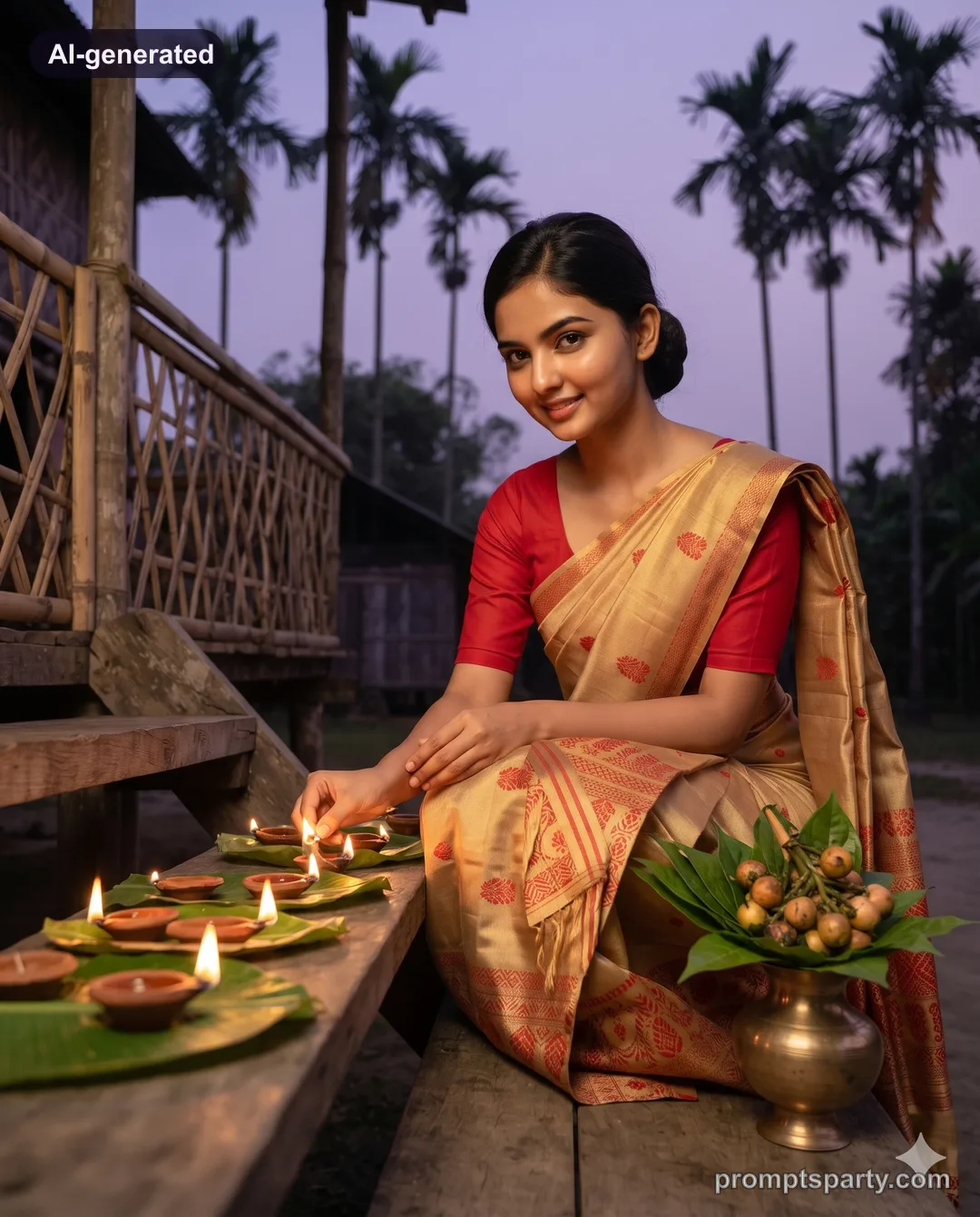
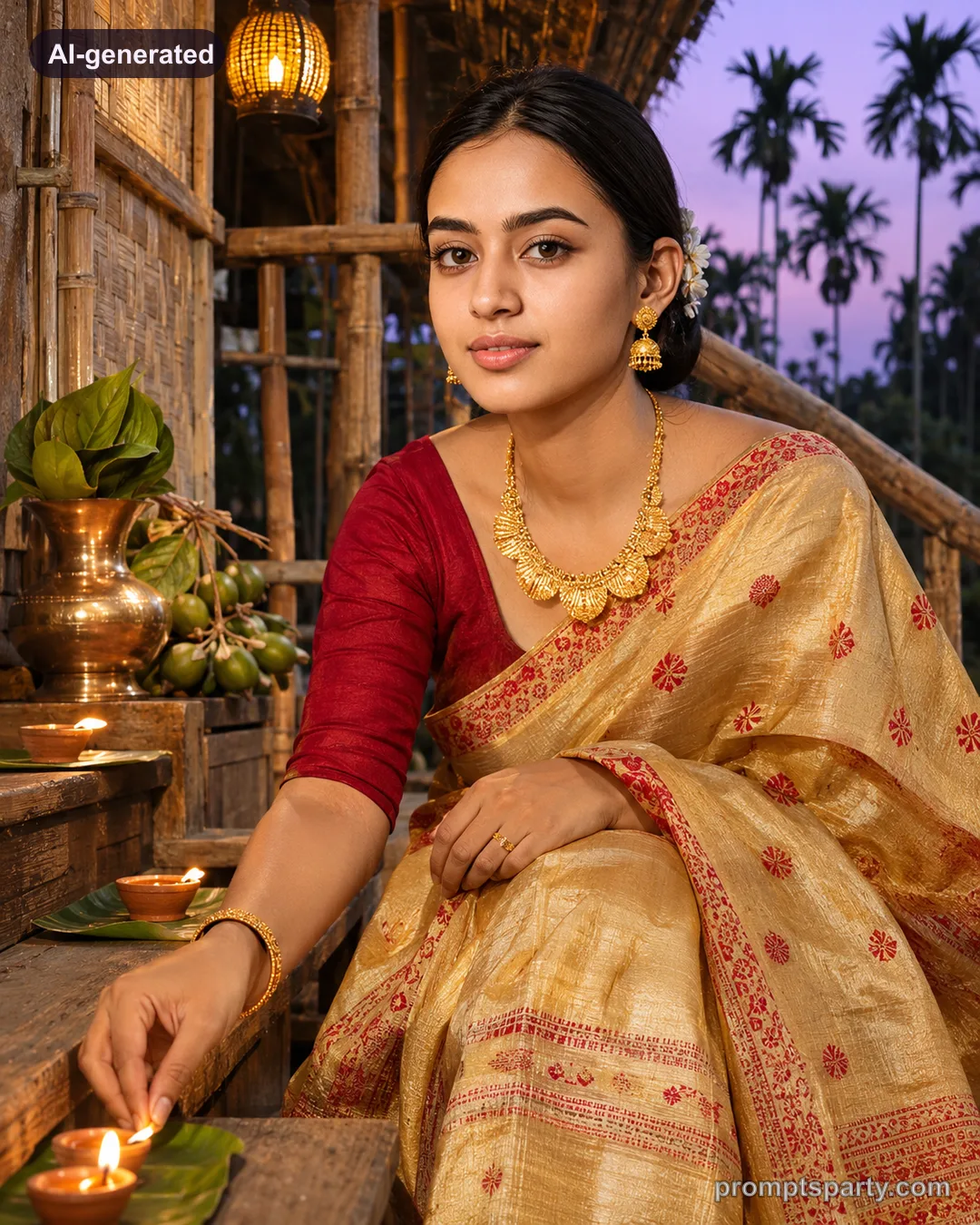
Keep the person's face, features, skin tone and expression exactly as in the uploaded photo, so friends recognise them instantly; change only clothing, styling, setting and light. Dress her in a golden muga silk mekhela chador with red woven motifs, a red blouse, a traditional gold jonbiri necklace and keru earrings, hair in a neat low bun. She sits on the wooden steps of a stilted Assam-type house with a bamboo railing, lighting small clay lamps lined on banana-leaf plates, a bunch of areca nut and betel leaves on a brass bota beside her. Light: diyas at 1900K and a soft violet dusk sky behind tall betel-nut palms. 50mm f/1.8, eye level, calm and dignified, natural warm grade showing the silk's natural sheen. Avoid generic saree draping. Photorealistic, real-camera look: visible skin texture and pores, natural catchlights, accurate hands, crisp textile detail, no airbrushing, no cartoon look, no logos or watermark. Aspect ratio 4:5.
1. Assam: Golden Muga Mekhela Chador with Clay Lamps
In Assam, the traditional attire is the two-piece mekhela chador, handwoven in lustrous golden muga silk with crimson motifs. To prevent AI models from defaulting to a standard six-yard saree drape, the prompt must explicitly specify “two-piece drape” and describe the setting—such as the wooden steps of a stilted Chang ghar with bamboo railings and banana-leaf lamp plates.
In our side-by-side test with house model Riya and Maya, Gemini rendered the subtle metallic muga sheen and soft violet dusk sky with natural photographic restraint. ChatGPT delivered sharper red woven border contrast and crisp bamboo railing definition.
Odisha Sambalpuri Ikat Saree Jhoti Diya AI Photo Prompt
 Gemini
 ChatGPT
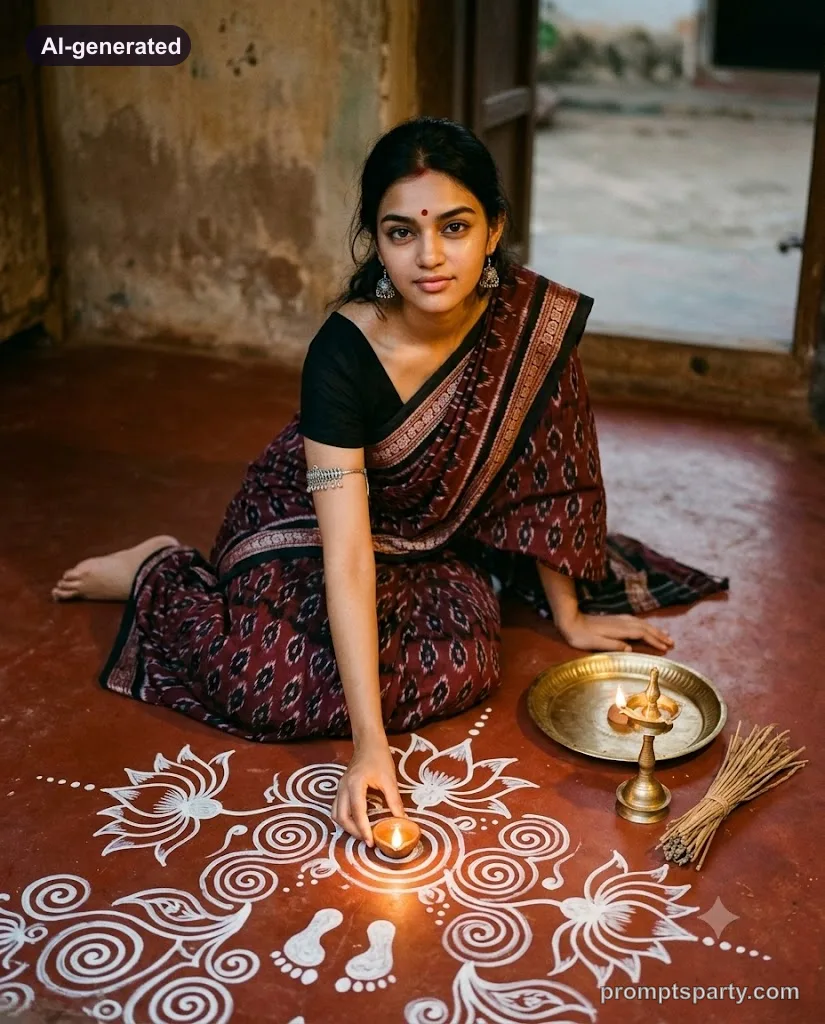
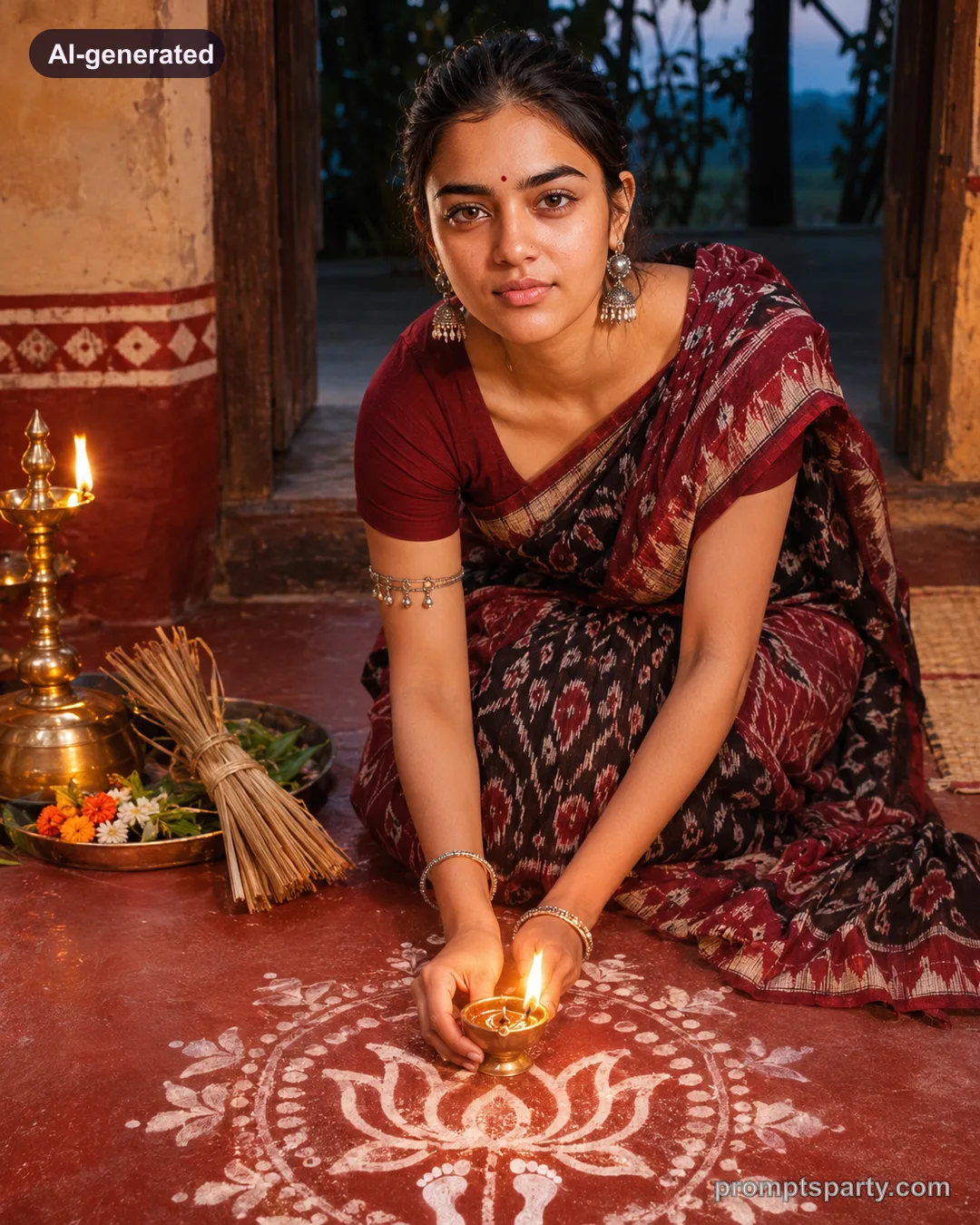
Identity lock: keep the person's face, features, skin tone and expression exactly as in the uploaded photo, including face shape, eyebrow shape, teeth and natural asymmetry; no face swap, no filter look. Dress her in a maroon-and-black Sambalpuri ikat cotton saree with the classic blurred-edge motifs and a temple-pattern border, silver tribal-style earrings, a silver armlet and a small red bindi. She kneels on a red-oxide floor painted with white rice-paste jhoti chita patterns of lotus and footprints, placing a diya at the centre of the design. A brass lamp and a bundle of jute sticks (kaunria kathi) for the ancestors' ritual rest nearby. Warm 2000K flame light, soft dusk through a doorway. 35mm f/2, slightly overhead, rich natural colours, fine film grain. Ultra-realistic finish: true-to-life skin with pores and slight imperfections, believable shadows, correct anatomy and hands, no over-sharpening, no plastic skin, no added text. Aspect ratio 4:5.
2. Odisha: Sambalpuri Ikat and Ancestral Jhoti Rituals
Odisha’s Diwali involves the heartfelt evening ritual of honoring ancestors with jute sticks (kaunria kathi) and placing clay diyas over intricate white rice-paste jhoti chita artwork drawn on red-oxide floors. AI models frequently struggle with jhoti art unless you describe the medium: “uneven lines drawn with fingers in rice paste.”
Gujarati New Year Patola Saree Saal Mubarak AI Photo Prompt
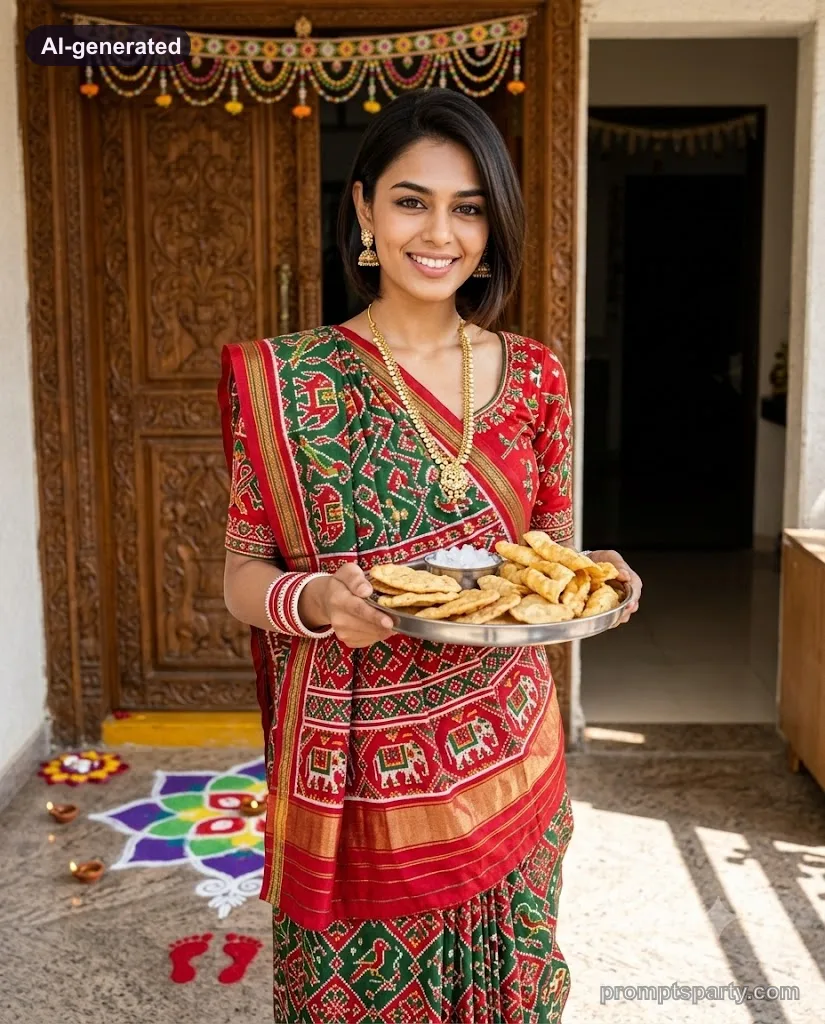 Gemini
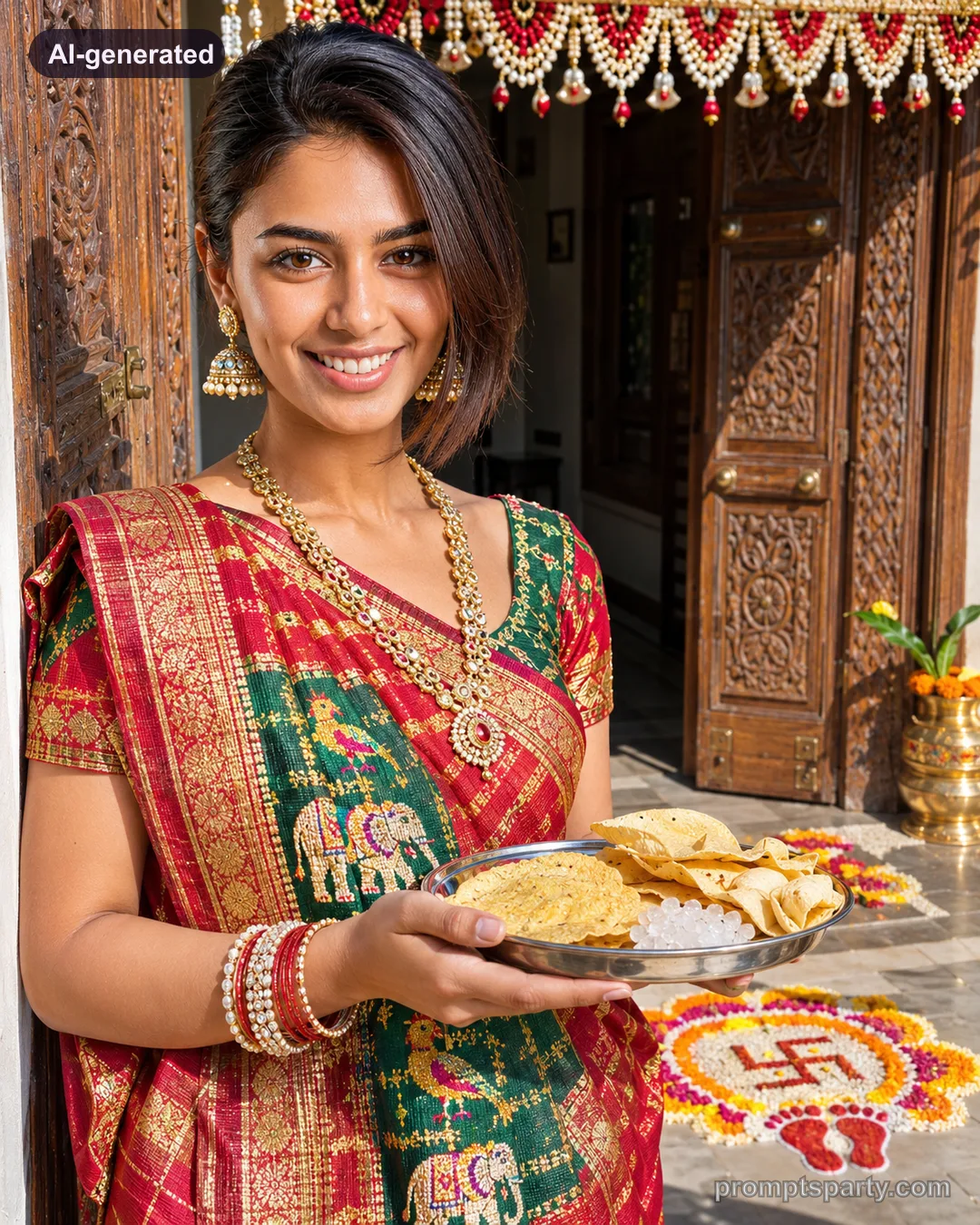 ChatGPT
Use my uploaded photo as the only face reference. Keep the person's face, features, skin tone and expression exactly as in the uploaded photo: same eyes, nose, lips, jawline, hairline, moles and marks; do not beautify, slim, lighten or age them. Dress her in a red-and-green double-ikat patola silk saree with elephant and parrot motifs, worn in the Gujarati seedha pallu style with the pallu over the right shoulder, a gold rani haar, polki jhumkas and red-and-white bangles. She stands at a carved wooden door decorated with a beaded toran and a fresh rangoli with "shubh labh" style swastik and kumkum footprints, holding a steel plate of mathiya, chorafali and sugar crystals. Bright morning light at 5200K, crisp shadows. 50mm f/2, welcoming smile, vivid clean grade. No written text. Hyper-realistic photograph: natural skin texture with real pores and fine hair, true fabric weave and metal shine, no plastic smoothing, no extra fingers, no text or watermark. Aspect ratio 4:5.
3. Gujarat: Patola Silk and Bestu Varas Saal Mubarak
Bestu Varas, the Gujarati New Year celebrated immediately after Diwali, calls for a vivid double-ikat Patola saree worn in the distinctive seedha pallu style (draped forward over the right shoulder). Prompts that name specific traditional Gujarati festive snacks—such as crispy mathiya, chorafali, and sugar crystals on a steel thali—produce much higher contextual accuracy.
In testing with house model Kiara, Gemini produced soft morning daylight with natural fabric drape folds, while ChatGPT made the geometric elephant and parrot ikat motifs visually pop with vivid red and emerald dyes.
Diwali Padwa Maharashtrian Couple Aukshan AI Photo Prompt
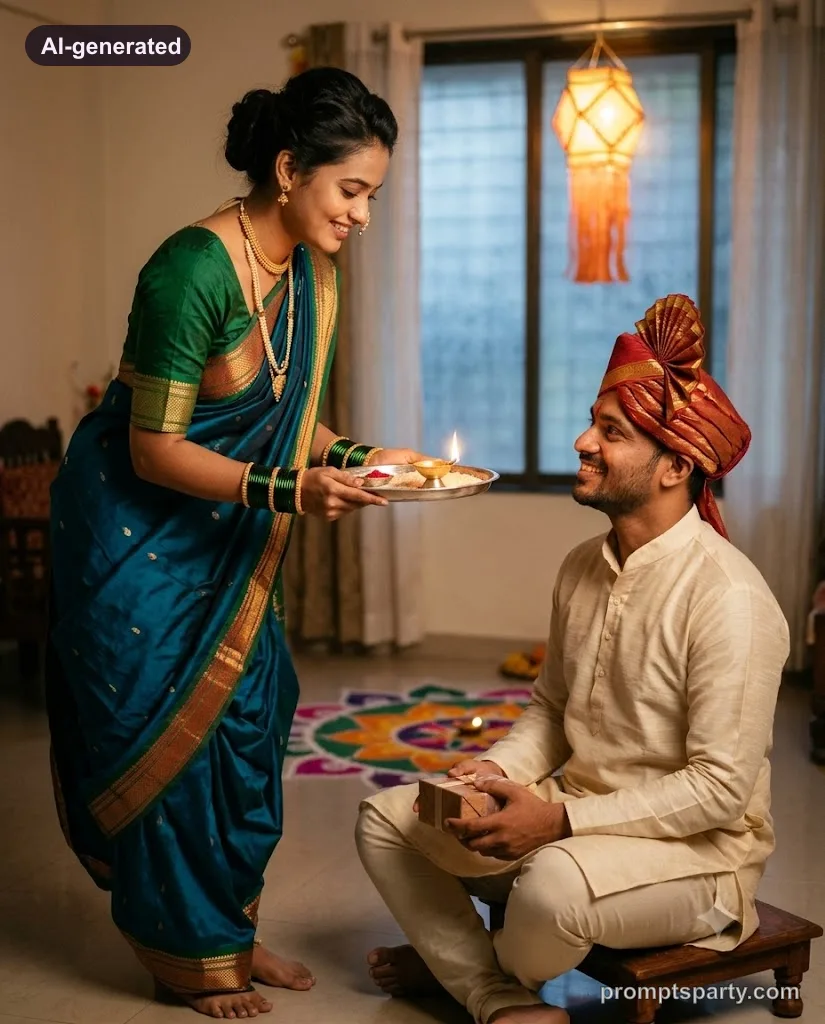 Gemini
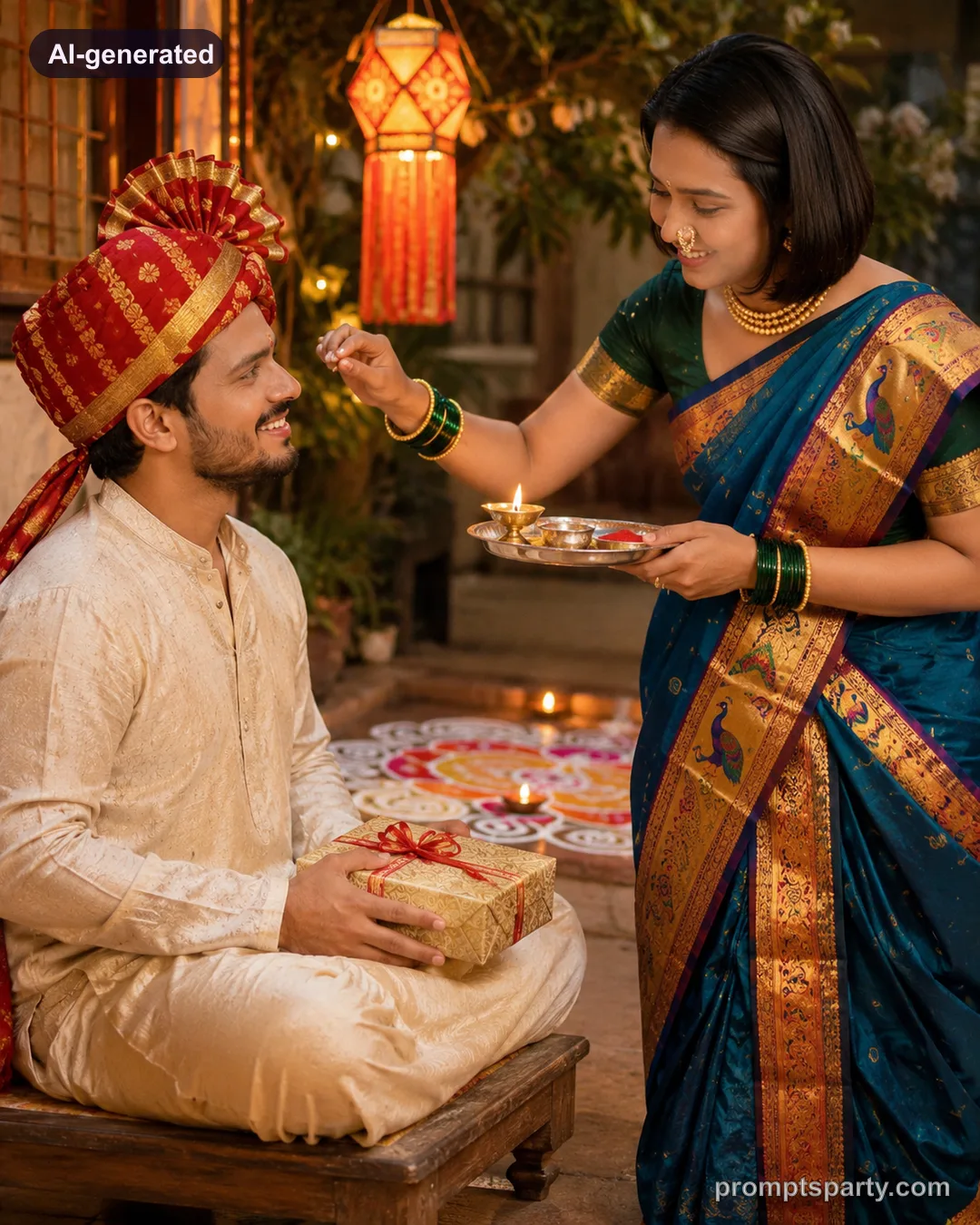 ChatGPT
Use the uploaded couple photo as the face reference. Keep both people's faces, features, skin tones and expressions exactly as in the uploaded photo, with their real height difference; do not beautify or merge their faces. She wears a peacock-blue Paithani-border nauvari saree with a green blouse, a nath, a thushi necklace and green glass bangles; he sits on a low wooden pat in a cream kurta and a red-gold pheta. She waves a silver aukshan plate with a ghee diya, rice and kumkum before his face as he smiles up at her, a gift box in his hands. Behind them, a lit akash kandil and a sanskar-bharti rangoli on the floor. Warm 2200K diya light and a soft window fill. 50mm f/1.8, eye level, affectionate candid moment, warm natural grade. Photorealistic, real-camera look: visible skin texture and pores, natural catchlights, accurate hands, crisp textile detail, no airbrushing, no cartoon look, no logos or watermark. Aspect ratio 4:5.
4. Maharashtra: Diwali Padwa Couple Aukshan Ceremony
Diwali Padwa celebrates the marital bond through the aukshan aarti ceremony, where the wife waves a silver lamp plate with rice and vermilion before her husband. A traditional peacock-blue nauvari saree, pearl nath, and a groom’s red-and-gold pheta anchor the scene in Maharashtrian heritage.
Maharashtrian Nauvari Faral Platter Diwali AI Photo Prompt
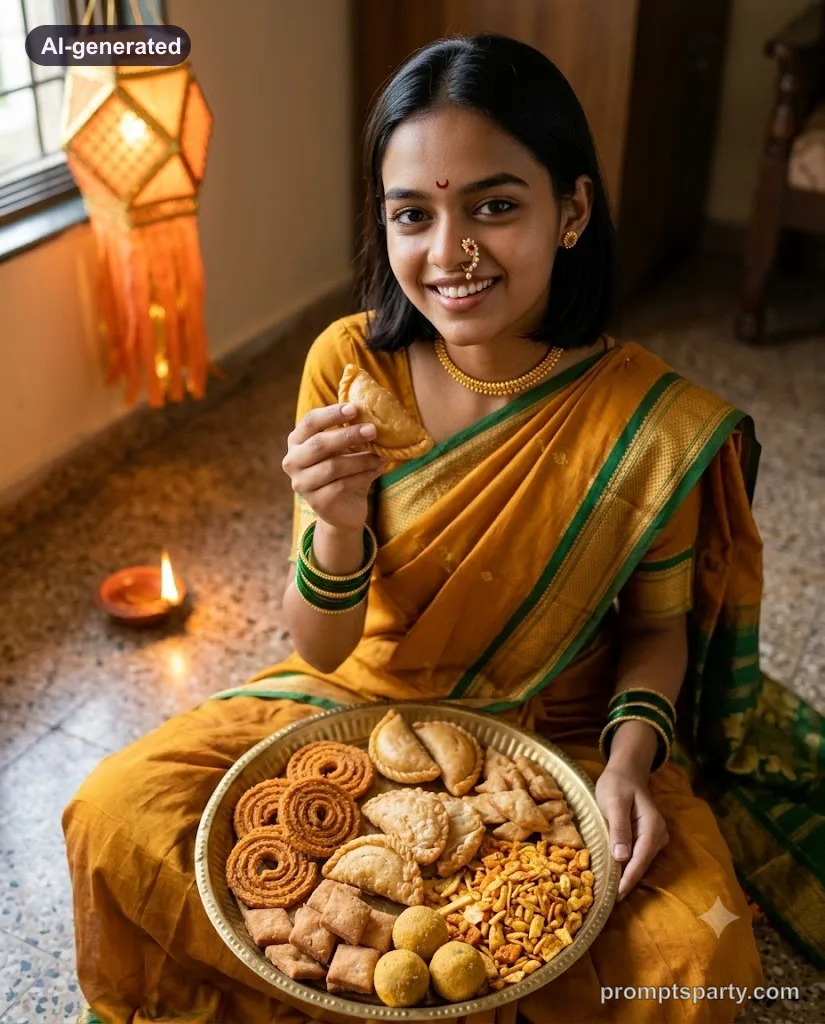 Gemini
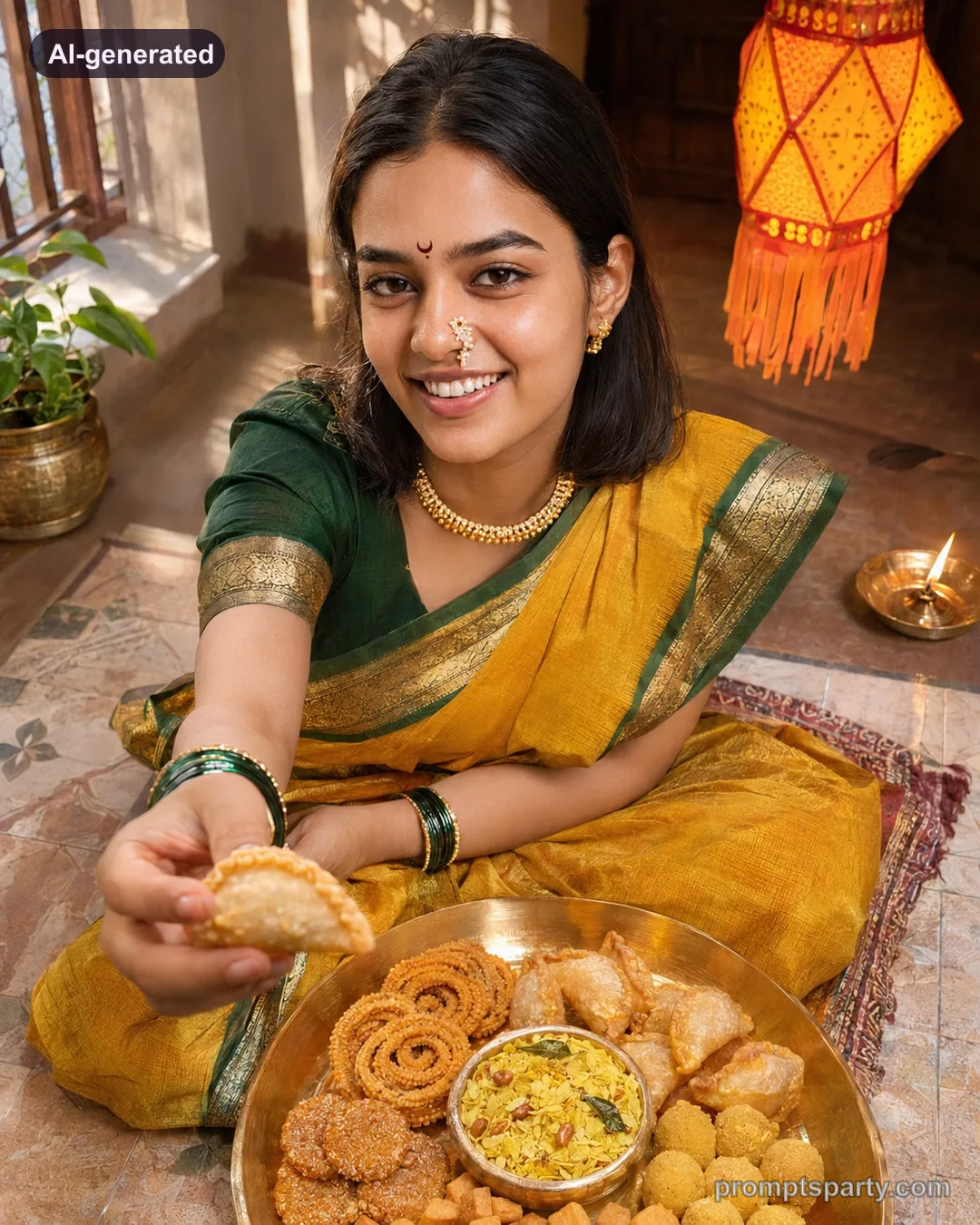 ChatGPT
Identity lock: keep the person's face, features, skin tone and expression exactly as in the uploaded photo, including face shape, eyebrow shape, teeth and natural asymmetry; no face swap, no filter look. Dress her in a mustard-yellow nauvari saree with a green and gold border, a half-moon chandrakor bindi, a pearl nath, a gold thushi and green bangles. She sits cross-legged on a tiled floor beside a large brass parat of faral: chakli, karanji, anarse, shankarpali, besan laddoo and chivda, offering one karanji to the camera with a grin. A lit panati diya and an orange akash kandil glow behind. Afternoon window light at 5000K mixed with diya glow. 35mm f/2, top-and-side candid angle, appetising food detail, warm grade. Ultra-realistic finish: true-to-life skin with pores and slight imperfections, believable shadows, correct anatomy and hands, no over-sharpening, no plastic skin, no added text. Aspect ratio 4:5.
5. Maharashtrian Faral Platter: Homemade Festive Snacks
Nothing captures a Maharashtrian home on Diwali morning better than the faral platter. Instead of asking for “Indian sweets”, our prompt explicitly lists the six traditional delicacies: spiral chakli, flaky crescent karanji, anarse, sweet shankarpali, besan laddoo, and savory poha chivda.
Tested with house model Divya, ChatGPT excelled at the textural depth of each individual snack on the brass parat, while Gemini excelled at capturing the warm window daylight spilling over the tiled floor.
Hyderabadi Khada Dupatta Diwali Evening AI Photo Prompt
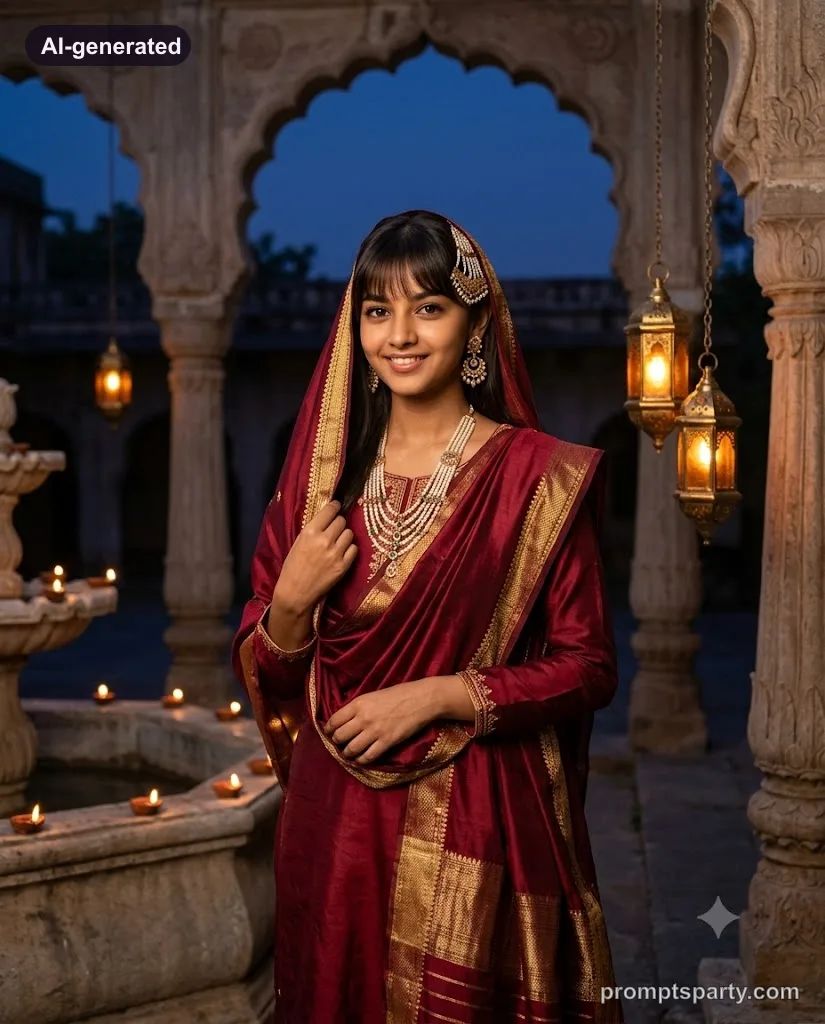 Gemini
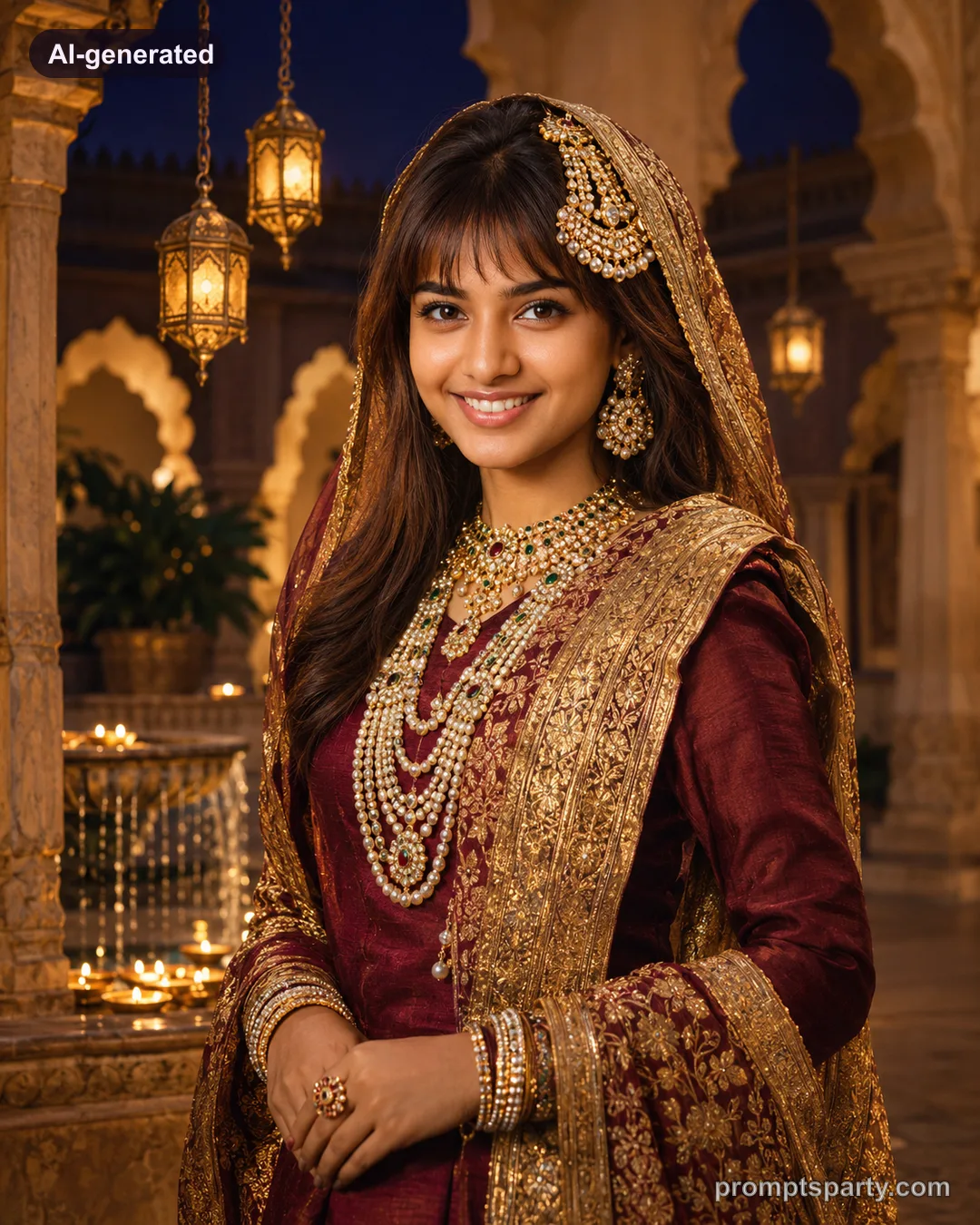 ChatGPT
Use my uploaded photo as the only face reference. Keep the person's face, features, skin tone and expression exactly as in the uploaded photo: same eyes, nose, lips, jawline, hairline, moles and marks; do not beautify, slim, lighten or age them. Dress her in a traditional khada dupatta: a fitted wine-red silk kurta, a churidar and a six-yard gold-bordered dupatta draped over the head and shoulder, with a jadau satlada necklace, a jhoomar on the side of the head and karanphool earrings. She stands in an old Deccani courtyard with cusped arches, brass lanterns hanging from chains and diyas along a stone fountain edge. Light: lanterns at 2300K, deep indigo sky. 85mm f/1.8, three-quarter view, poised and regal, rich jewel-tone grade with soft highlights on the jewellery. Hyper-realistic photograph: natural skin texture with real pores and fine hair, true fabric weave and metal shine, no plastic smoothing, no extra fingers, no text or watermark. Aspect ratio 4:5.
6. Hyderabad: Regal Khada Dupatta under Courtyard Arches
For a regal Deccani celebration, the six-yard khada dupatta with a fitted silk kurta, churidar, jhoomar side headpiece, and jadau satlada pearl necklace creates a timeless look. Specifying old Deccani cusped stone arches and brass chain lanterns provides authentic period architecture.
In our tests with house model Zoya, both models captured the deep wine-red silk tones beautifully, with Gemini favoring deep shadows and soft lantern flares, and ChatGPT highlighting the metallic fringe of the gold border.
Step-by-Step: How to Generate Your Regional Diwali Portrait
- Choose an uncluttered, well-lit portrait: Upload a clear, front-facing selfie or portrait taken in natural daylight. Avoid heavy filters, extreme angles, or dark indoor lighting.
- Start with an identity lock clause: Begin your prompt with clear facial preservation instructions: “Keep the person’s face, features, skin tone and expression exactly as in the uploaded photo; do not beautify, slim, or alter facial geometry.”
- Name the cultural garment specifically: Avoid generic terms like “traditional Indian dress”. Specify “muga silk mekhela chador”, “Sambalpuri ikat cotton saree”, or “nauvari saree with seedha pallu”.
- Specify regional festive props and architecture: Ground the image in reality by naming authentic props (e.g., “kaunria kathi jute sticks”, “brass faral platter with chakli and karanji”, “jhoti chita floor art”).
- Set the camera lens and lighting temperature: Direct the AI photographer with exact parameters: “50mm f/1.8 lens, eye level, 2200K diya flame lighting with soft dusk ambient light.”
Frequently Asked Questions
Can I swap the gender in these regional prompts?
Yes. Every prompt on PromptsParty includes ready-to-use variants for men and couples. For example, the Sambalpuri saree prompt easily adapts to an indigo Sambalpuri ikat kurta with a cream dhoti.
What should I do if the AI changes my face too much?
Regenerate once in a new session. If the facial likeness still drifts, strengthen your opening clause: “Strict face match: retain the exact eye shape, jawline, nose structure, and natural skin texture from the uploaded photo.”
Which tool is better for regional Indian festive photos: Gemini or ChatGPT?
Both tools excel at different aspects. Google Gemini is typically better at realistic skin pores, atmospheric candle and diya falloff, and photographic depth of field. OpenAI ChatGPT often renders sharper textile embroidery, crisp jewellery filigree, and complex multi-object food platters.