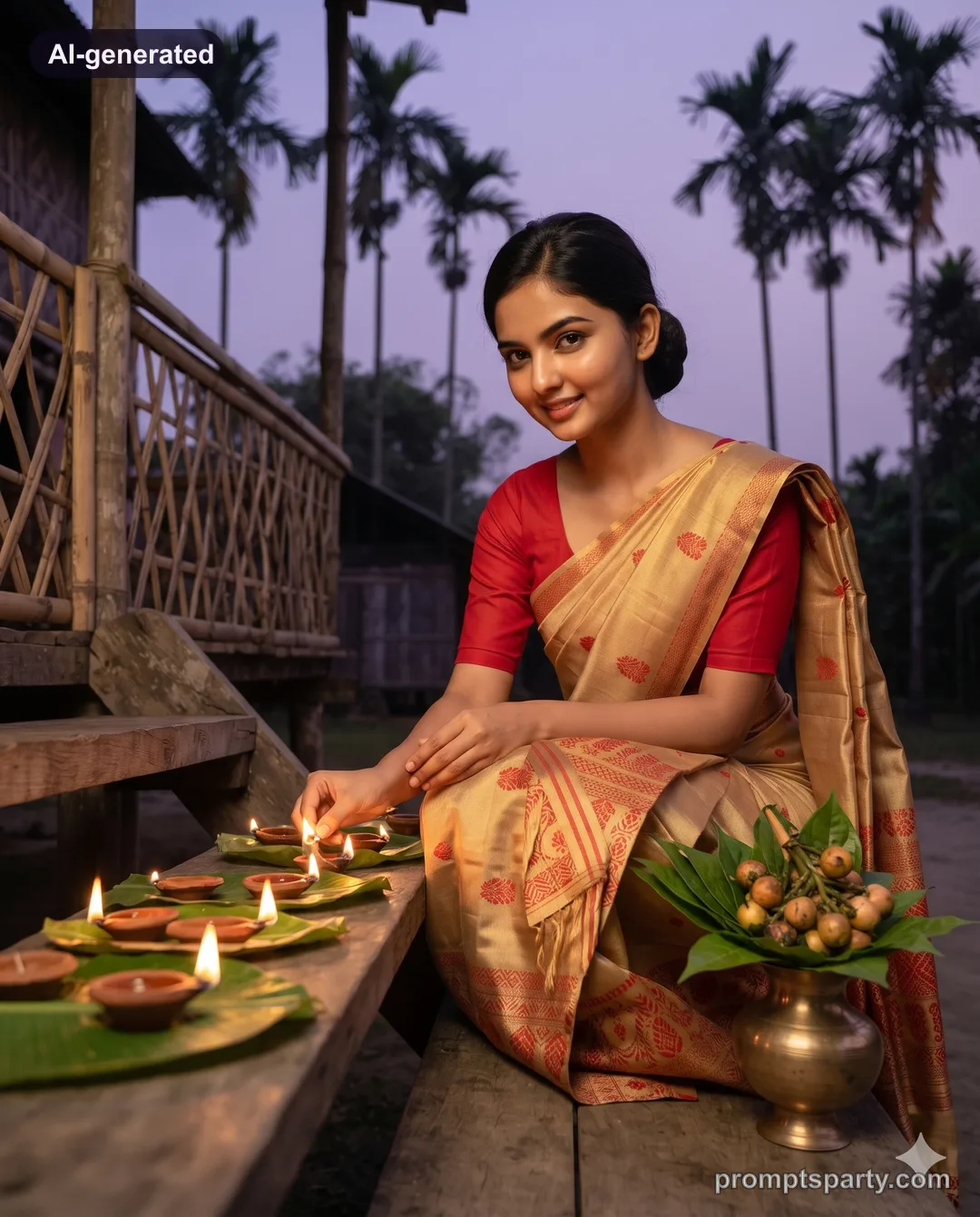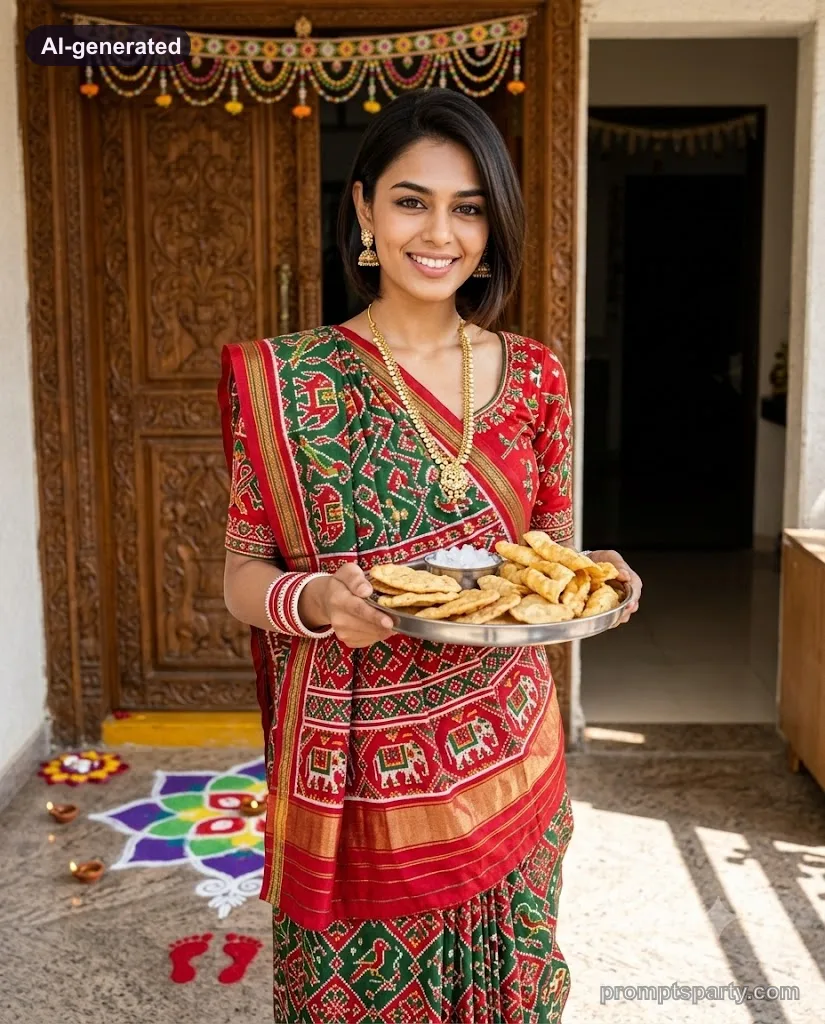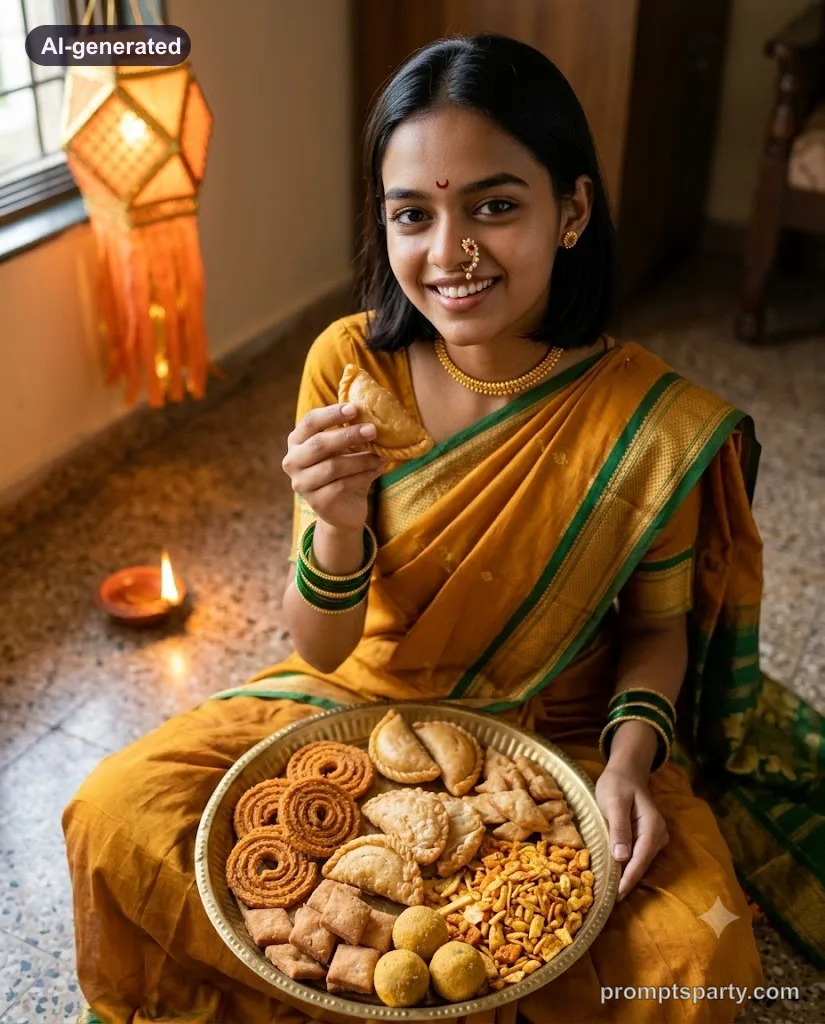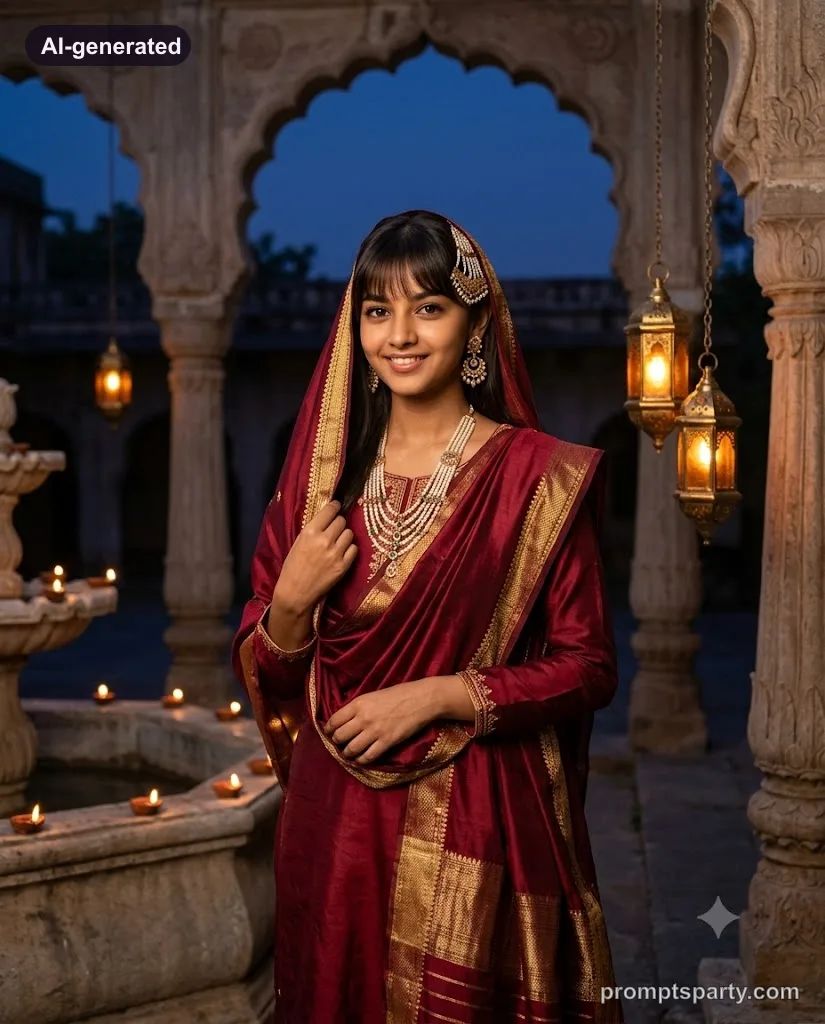

Odisha Sambalpuri Ikat Saree Jhoti Diya AI Photo Prompt
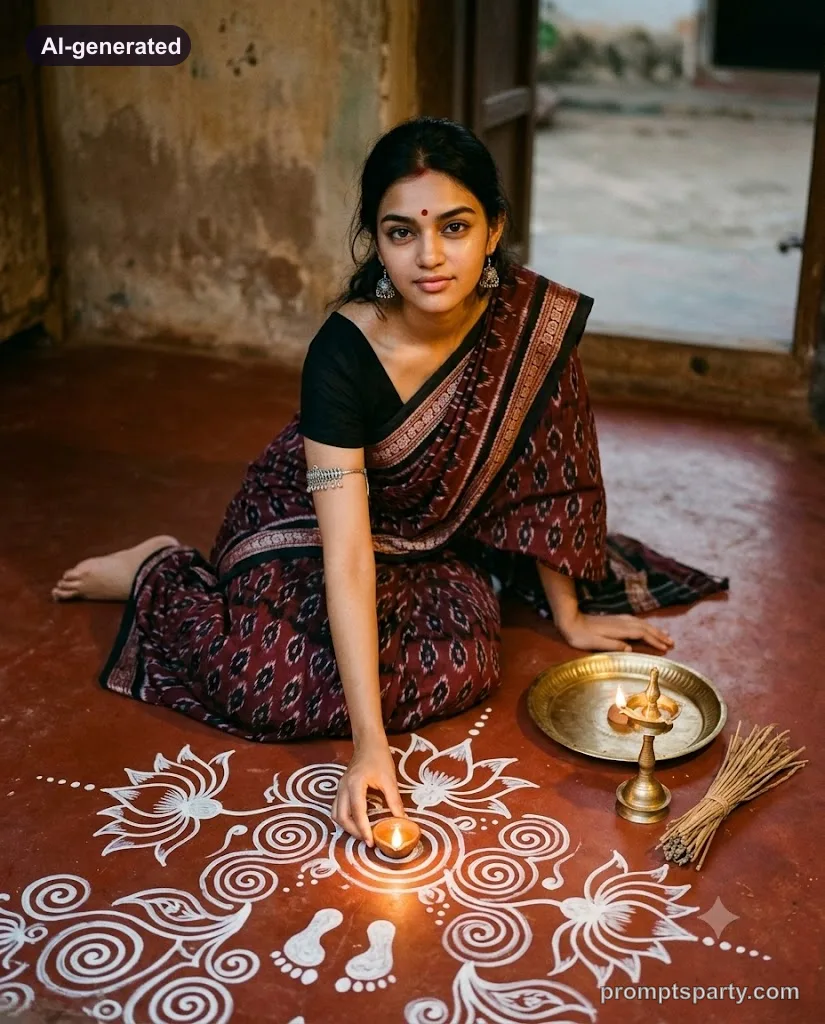
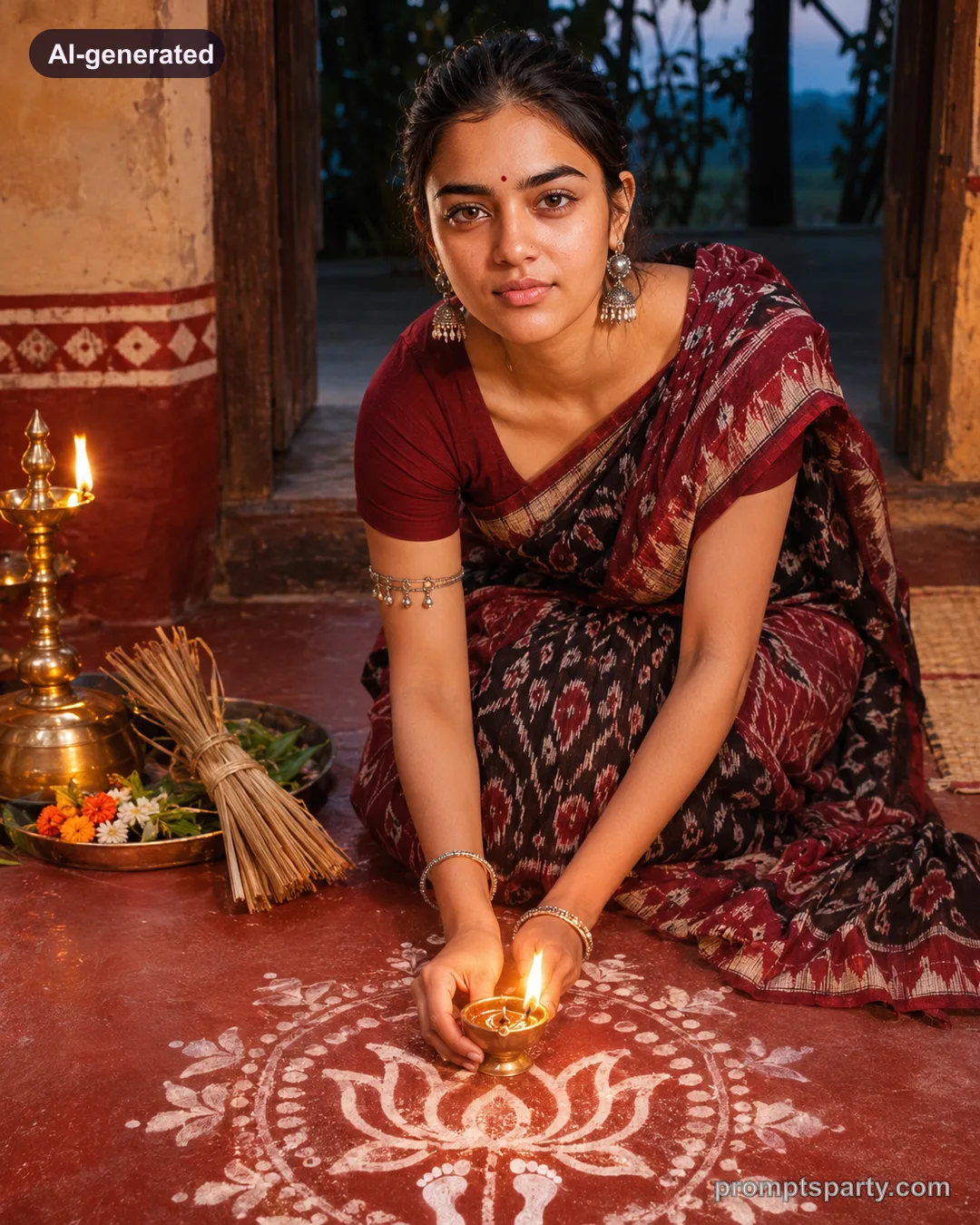
An Odia Diwali portrait in a handwoven Sambalpuri ikat saree beside white jhoti art and diyas. Upload your photo to Gemini or ChatGPT.
 AI-generated
 AI-generated
The prompt
Identity lock: keep the person's face, features, skin tone and expression exactly as in the uploaded photo, including face shape, eyebrow shape, teeth and natural asymmetry; no face swap, no filter look. Dress her in a maroon-and-black Sambalpuri ikat cotton saree with the classic blurred-edge motifs and a temple-pattern border, silver tribal-style earrings, a silver armlet and a small red bindi. She kneels on a red-oxide floor painted with white rice-paste jhoti chita patterns of lotus and footprints, placing a diya at the centre of the design. A brass lamp and a bundle of jute sticks (kaunria kathi) for the ancestors' ritual rest nearby. Warm 2000K flame light, soft dusk through a doorway. 35mm f/2, slightly overhead, rich natural colours, fine film grain. Ultra-realistic finish: true-to-life skin with pores and slight imperfections, believable shadows, correct anatomy and hands, no over-sharpening, no plastic skin, no added text. Aspect ratio 4:5.
For men
He wears a Sambalpuri ikat kurta in indigo with a cream dhoti, kneeling by the jhoti art.
Standing
She stands in the doorway holding a lit jute stick, the jhoti art glowing at her feet.
Tips
- Name "ikat blurred edges" to get real handloom texture.
- Jhoti is drawn with fingers in rice paste, so ask for slightly uneven lines.
FAQ
What is jhoti chita?
Traditional Odia floor and wall art drawn by hand with white rice paste.
What are the jute sticks for?
In Odisha, families light jute sticks on Diwali to remember their ancestors.
Did it work for you?
Only use photos you have permission to use. Sample images are AI-generated with our house models.